Table of Contents
ToggleA dishwasher that won’t drain is more than just annoying, it’s a sign that your Frigidaire’s drain pump is struggling. Standing water, strange grinding sounds, or a musty smell inside the tub all point to pump trouble. The good news is that most drain pump issues are diagnosable and fixable without calling a technician, provided you’re willing to get hands-on. This guide walks you through identifying what’s gone wrong, accessing the pump safely, and deciding whether a cleaning or full replacement makes sense. With basic tools and a little patience, you can restore your dishwasher to working order and avoid the service call markup.
Key Takeaways
- A Frigidaire dishwasher drain pump that fails often shows clear signs like standing water, grinding noises, or slow draining—most issues are diagnosable and fixable without professional service calls.
- Before attempting any repairs, always unplug your dishwasher and check for blockages in the filter basket, sump, and drain hose, as these account for the majority of apparent pump failures.
- Cleaning the drain pump works if the impeller rotates freely and the blockage is debris-based; replacement is necessary only if the motor is seized, the housing is cracked, or you detect a burning smell.
- Frigidaire dishwasher drain pumps typically last 7–10 years with proper maintenance, and weekly filter cleaning plus monthly cleaning cycles significantly extend pump lifespan and prevent costly repairs.
- Replacement pump costs range from $150–$400 in parts, making early detection and preventive maintenance the most cost-effective approach to maintaining reliable drainage.
Understanding Your Frigidaire Dishwasher Drain Pump
The drain pump is a small but critical motor that sits near the bottom of your dishwasher. Its job is straightforward: push dirty water out of the tub and into your home’s drain line once the wash cycle ends. Frigidaire models typically use either a single-motor design (where one motor handles both wash circulation and drainage) or a dual-motor setup (where a separate pump dedicated to draining) depending on the model year and series.
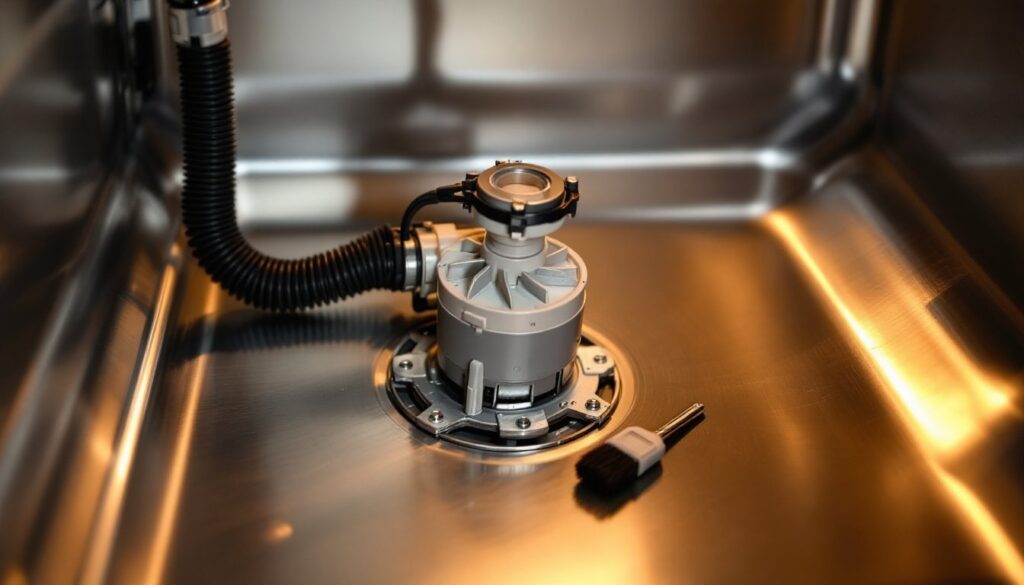
The pump itself isn’t complicated, it’s an electric motor that spins an impeller, a fan-like component that forces water through the drain hose. Most pumps are sealed units, meaning you can’t repair the internal motor if it fails. But, the pump can get blocked by food debris, grease buildup, or foreign objects, and those blockages are often cleanable.
Frigidaire drain pumps typically last 7–10 years with regular use, though hard water, poor filter maintenance, and overloading the tub can shorten their lifespan. Understanding what you’re working with helps you troubleshoot faster and make a confident repair decision.
Common Signs Your Drain Pump Is Failing
Catching a failing pump early saves frustration and prevents water damage. Watch for these telltale signs:
Standing water in the tub after the cycle ends is the most obvious red flag. If the dishwasher fills, washes, but doesn’t empty, the pump either isn’t spinning or water can’t flow past a blockage. Turn off the unit immediately to avoid overflow.
Gurgling or grinding noises during the drain phase suggest the impeller is spinning but struggling against debris, or the motor is wearing out. A healthy pump is nearly silent.
Slow draining (taking minutes instead of seconds) often means partial blockage rather than complete pump failure. This is your window to clean before the pump gives up entirely.
Leaking water beneath the dishwasher can indicate a cracked pump housing or loose connection at the drain outlet. Check under the unit and trace the source, leaks don’t always mean the pump itself is bad, but they need immediate attention.
Burning smell or visible corrosion on the pump motor signals electrical problems or advanced age. Stop using the dishwasher and plan a replacement. Standing water in your dishwasher can reveal deeper issues beyond the pump, so diagnosing the root cause matters.
How to Safely Access and Inspect the Pump
Before you touch anything, unplug the dishwasher from the electrical outlet or switch off the breaker if it’s hardwired. Water and electricity don’t mix, and a live machine can cause serious injury.
Empty the tub completely. Remove the bottom rack, then unscrew and lift out the filter basket (usually a cylindrical cage in the center of the floor). Look for debris, food bits, glass, plastic, and pull out what you see. Run a flashlight into the sump area (the low point where water pools) and check for blockages.
Locate the drain pump. Most Frigidaire models position the pump under the floor of the tub, accessible from the bottom. You’ll need to remove the toe kick (the panel below the door), unhook the door latch, and tilt the unit forward or remove the front panel, depending on model design. Refer to your unit’s manual for exact disassembly steps, some models differ significantly.
Inspect the pump visually. Once exposed, look for cracks, corrosion, or loose hoses. The drain hose (typically black rubber) should fit snugly at the pump outlet. Wiggle it gently to confirm it’s not the source of a leak.
Check the drain hose line inside the tub. A blockage in the hose itself, not the pump, can feel like pump failure. Remove the hose clamp at the pump and attempt to run water through it (over a bucket) by hand. If water doesn’t flow freely, the hose is kinked or clogged.
Step-by-Step Repair and Replacement Guide
When to Clean Versus When to Replace
Before you order a replacement pump (usually $150–$400 in parts, plus labor if hiring), try cleaning first. Cleaning works if the pump is intact but blocked. Replacement is necessary if the motor won’t spin, the housing is cracked, or you smell burning.
To clean the pump:
-
With the pump exposed and the dishwasher unplugged, manually rotate the impeller using a small screwdriver or hex key. It should turn freely without grinding resistance. If it’s stuck, don’t force it, the motor is likely seized and replacement is your only option.
-
If it rotates, disconnect the drain hose at the pump outlet. Use a small brush or old toothbrush to scrub away buildup around the impeller housing. Wipe clean with a damp cloth.
-
Flush the pump inlet (the opening water enters from the tub) with a garden hose or pitcher of hot water to dislodge trapped debris. Repeat until water runs clear.
-
Reconnect the hose, plug in the dishwasher, and run a short cycle. Listen for unusual noise and check for leaks. If water drains normally and quietly, you’ve solved it.
To replace the pump:
-
Order the correct replacement pump assembly for your Frigidaire model number. Verify the part number on your unit’s label (usually inside the door frame) before buying.
-
With the dishwasher unplugged and the old pump exposed, disconnect the electrical connector (a plastic clip that unplugs the motor wiring). Mark the wires with tape if the connector isn’t clearly keyed, so you don’t reverse polarity on reinstall.
-
Unclip or unbolt the pump mount (typically 2–3 fasteners). Slide out the old pump and set it aside.
-
Position the new pump in the same orientation as the original. Secure with the mounting hardware, ensuring the inlet aligns with the sump drain line and the outlet faces the discharge hose.
-
Reconnect the electrical connector firmly. Ensure both hose clamps are tight (snug but not crushing the hose).
-
Reassemble the dishwasher floor, filter basket, and front panel in reverse order. Plug in and run a full cycle. Monitor for leaks under the unit.
Prevention Tips for Long-Term Performance
A little preventive maintenance extends pump life and prevents most drainage headaches.
Clean the filter weekly. The filter basket catches food and debris before they reach the pump. Rinsing it under running water after each load keeps the pump inlet clear. If you run your dishwasher daily, deep-clean the filter monthly by soaking it in hot water with a bit of white vinegar to dissolve mineral deposits.
Scrape dishes thoroughly before loading. Large food scraps, bones, and grease should go in the trash, not the dishwasher. A single forgotten chicken wing can block the pump inlet and trigger a service call.
Run a cleaning cycle monthly. Use a commercial dishwasher cleaner (brands like Finish or Affresh are standard) or white vinegar in an empty cycle to dissolve buildup in the pump, lines, and spray arms. This is especially important in areas with hard water, where mineral deposits accumulate quickly.
Check the drain hose annually. Look for kinks, cracks, or buildup around the hose where it connects to the pump and where it exits the dishwasher cabinet. A kinked hose can strain the pump and reduce lifespan.
Don’t ignore early warning signs. Slow draining or minor gurgling sounds are your dishwasher asking for attention. Clean the filter and run a cleaning cycle immediately. Ignoring small issues almost always results in complete pump failure, which costs more to repair.
Conclusion
Frigidaire dishwasher drain pump problems don’t always require a technician. Most homeowners can diagnose the issue and decide between a cleaning and a replacement with basic tools and patience. Always unplug before starting work, inspect the entire drainage path before assuming pump failure, and don’t skip preventive maintenance, it’s the cheapest insurance you can buy. If you prefer guided tutorials for step-by-step reassembly, DIY repair guides and tutorials and detailed instructional resources offer model-specific walkthroughs. Take action early, and your Frigidaire will drain reliably for years to come.