Table of Contents
ToggleHandleless kitchen cabinets have moved from designer showrooms into everyday home renovations, and for good reason. They deliver a clean, minimalist aesthetic that makes kitchens feel larger and more contemporary, without the clutter of protruding hardware. Whether you’re renovating from scratch or refreshing dated cabinetry, handleless options offer practical benefits alongside visual appeal. This guide walks you through what handleless cabinets are, why they’re gaining traction, how to install them, and whether they fit your kitchen and budget.
Key Takeaways
- Handleless kitchen cabinets use integrated finger grooves, push-to-open mechanisms, or soft-close hinges instead of traditional knobs and pulls, creating a clean, minimalist aesthetic that makes kitchens feel larger and more contemporary.
- These cabinets cost 10–20% more than traditional hardware-based cabinetry but offer lower maintenance, easier cleaning, and improved durability since fewer moving parts mean less that can break or loosen over time.
- Handleless cabinets work best in contemporary and minimalist kitchens with flat-panel doors and integrated appliances, but can clash with traditional, farmhouse, or rustic design styles.
- Installation options range from basic finger-grip indents (inexpensive) to premium soft-close systems with hydraulic hinges, making it easy to balance cost and functionality based on your budget.
- Pair handleless cabinets with organized storage solutions like pull-out shelves and drawer dividers to maximize their visual minimalism and prevent daily confusion about item placement.
- Before committing to full handleless replacement, consider retrofitting existing cabinets with soft-close hinges as a $30–50-per-hinge test to experience modern hardware without major capital investment.
What Are Handleless Kitchen Cabinets?
Handleless kitchen cabinets eliminate traditional knobs and pulls entirely. Instead, they rely on integrated finger grooves, push-to-open mechanisms, or touch latches built into the cabinet door or face frame. Some designs use a subtle routed indent along the top or bottom edge of the door: others incorporate a thin gap between the door and frame that serves as a grip point.
The mechanism varies by type. Basic handleless cabinets use a mechanical push-catch: press the door and it latches: press again and it springs slightly open. Premium versions employ soft-close hinges and damped slides that slow the door’s movement, preventing slams. A few high-end models integrate motion sensors or touch-activated latches.
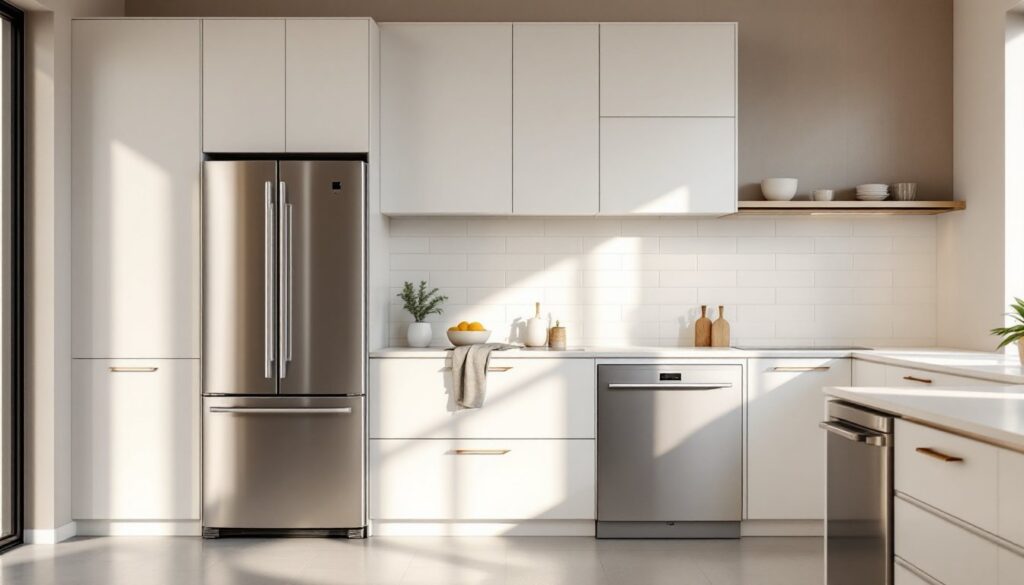
These cabinets pair well with other contemporary kitchen styles, integrated appliances, flat-panel doors, matte or gloss lacquer finishes, and minimalist backsplashes. The lack of hardware creates sightlines across the kitchen that feel intentional and unbroken.
Why Handleless Cabinets Are Trending Now
Handleless cabinets represent a shift toward clutter-free design and functionality. Homeowners are moving away from ornate knobs and pulls that catch on aprons and catch dust. Designers favor the visual continuity handleless models offer, no visual interruption across cabinetry runs.
From a practical standpoint, fewer moving parts mean fewer things to break or adjust. Hardware handles loosen over time and need tightening: integrated solutions eliminate that maintenance. Cleaning is simpler too: no recessed grooves around knobs to harbor crumbs or grease.
The trend also aligns with aging-in-place design. Elderly homeowners or those with dexterity concerns often find push-to-open mechanisms easier to use than twisting handles. It’s inclusive design that doesn’t look institutional.
Key Design Advantages
- Visual cohesion: Flat, uninterrupted cabinet fronts create a gallery-like aesthetic, especially when paired with integrated appliances.
- Space perception: A kitchen without hardware hardware visually reads as larger and less cluttered, even if square footage doesn’t change.
- Easy cleaning: No crevices or protrusions to trap debris: a single wipe with a cloth does the job.
- Durability: Fewer metal components mean less corrosion and lower maintenance in damp kitchen environments.
- Contemporary appeal: Aligned with current design trends favoring minimalism, which interior design trends continue to emphasize.
Installation Methods and Styles
Installation depends on whether you’re retrofitting existing cabinets or installing new handleless units. Retrofitting (adding handleless hardware to current cabinets) works if your cabinet doors are solid wood or plywood with minimal existing hardware holes. Fill old handle holes with wooden plugs and wood filler, sand flush, and finish before installation.
For new cabinetry, stock and semi-custom options are widely available at big-box retailers and online suppliers. Custom cabinetry shops often have handleless experience and can integrate soft-close hinges, damped slides, and touch latches during manufacturing.
Three common styles dominate the market:
- Finger grip indents: A routed groove along the top or bottom edge serves as the grip point. Minimal hardware needed: simple, inexpensive, and works well on flat-panel doors.
- Push-catch mechanisms: Mechanical latches built into the door or frame. Press once to open: press again to close. Reliable but occasionally needs adjustment if the catch loosens.
- Soft-close systems: Premium integrated hinges and slides that use springs or hydraulics to close doors smoothly and silently. Higher cost, but eliminates slamming and wear.
When ordering custom cabinets, specify handleless upfront and confirm that kitchen remodel design inspiration aligns with your cabinetry choice. Mixing handleless and traditional cabinets is possible but visually jarring unless separated by appliances or room zones.
Cost Considerations and Budget Planning
Handleless cabinets cost roughly 10–20% more than traditional hardware-based cabinetry, depending on mechanism type and wood species. A basic finger-grip version adds minimal cost: soft-close systems push pricing higher.
Stock cabinetry with integrated handleless options runs $100–300 per linear foot: semi-custom and fully custom cabinetry ranges from $200–600+ per linear foot. A typical 10×12-foot kitchen island or run of base cabinets costs $1,500–5,000 more in handleless versions, before installation labor.
Labor for installation is similar to standard cabinet installation: $50–150 per hour depending on region and complexity. Soft-close mechanisms may require on-site adjustments, adding a few hundred dollars.
Cost-saving approaches include:
- Mixing handleless upper cabinets with traditional base cabinets (visible uppers create more visual impact).
- Choosing finger-grip indents over premium soft-close mechanisms.
- Retrofitting one cabinet run or island while keeping hardware on others.
- Shopping for stock options if custom cabinetry is out of budget.
Always budget for a site visit or detailed measurements before ordering. Incorrect door heights or depths waste money and time. Shipping, especially for custom units, can take 8–12 weeks, so factor timeline into planning.
Maintaining and Caring for Handleless Cabinets
Handleless cabinets require minimal upkeep compared to hardware-laden designs, but a few practices extend their lifespan.
Weekly and monthly care:
- Wipe cabinet fronts with a soft, damp cloth and mild dish soap. Avoid abrasive scrubbers that scratch lacquer or veneer.
- Dry immediately to prevent water spots, especially on high-gloss finishes.
- For stubborn grease, use a small amount of white vinegar on a microfiber cloth.
Mechanism maintenance:
- Test push-catch latches periodically: if they feel loose or don’t engage fully, tighten bolts behind the mechanism (usually accessible from inside the cabinet).
- Soft-close hinges rarely need adjustment, but occasionally damping fluid leaks or hinges wear out. Contact your cabinet supplier for replacement parts.
- Keep the finger-grip groove clean: crumbs or dried food can interfere with smooth door movement.
Finishes:
- Lacquer and high-gloss polyurethane finishes are popular but show fingerprints and dust readily. A dust-resistant spray wax applied monthly minimizes this.
- Matte finishes hide dust better but can appear dull if not cleaned regularly.
- Avoid placing hot cookware directly on cabinet edges: thermal stress can warp or peel finishes.
If a door becomes warped, sticky, or the catch fails, most handleless systems allow door replacement without replacing the entire run. Contact your cabinet maker for parts availability.
Is Handleless Right for Your Kitchen?
Handleless cabinets shine in contemporary and minimalist kitchens but can clash with traditional, farmhouse, or rustic designs. If your kitchen features shaker-style doors, recessed panels, wood stains, or ornate hardware, handleless systems may feel out of place.
Consider lifestyle and household composition. Homes with young children or frequent guests benefit from soft-close mechanisms that prevent finger pinching and loud slamming. Households without mechanical aptitude should lean toward simpler finger-grip designs rather than latch mechanisms requiring occasional adjustment.
Budget matters too. If cost is tight, retrofit existing cabinets with soft-close hinges alone, a $30–50 upgrade per hinge, before committing to full handleless replacement. This gives you a feel for modern hardware without the capital outlay.
Storage needs influence the decision as well. Handleless cabinets work best when kitchen layout is organized and intuitive: if items are scattered across deep cabinets, the visual minimalism is undercut by daily confusion about where things live. Pair handleless design with pull-out shelves, drawer dividers, and labeled zones for maximum benefit.
Research cabinetry options on home decorating and design inspiration sites to see handleless kitchens in context. Browse photos that match your architectural style and room dimensions. A kitchen that photographs beautifully online might feel cramped or cold in person, so view samples in person when possible. Most cabinet suppliers offer showroom appointments or sample doors you can touch and operate.
If you’re committed to a kitchen refresh and appreciate contemporary aesthetics, handleless cabinets offer a tangible, durable investment in style and functionality. They’re neither trend-of-the-moment nor difficult to maintain, they’re a practical modernization that grows on you year after year.