Table of Contents
ToggleFire ants are among the most frustrating backyard invaders, aggressive, painful, and stubborn. If you’ve dealt with a mound in your yard or felt their sting, you know why fire ant control matters. Fire ant killer powder offers a practical, often cost-effective solution for homeowners who want to reclaim their outdoor space without calling in professionals right away. This guide walks you through what these powders are, how they work, and how to use them safely and effectively.
Key Takeaways
- Fire ant killer powder works by coating worker ants’ bodies, which carry the toxin back to the colony through a process called horizontal transfer, eliminating hundreds or thousands of ants within 24 to 72 hours.
- Natural options like diatomaceous earth and spinosad are safer for households with pets and children, while chemical-based powders with pyrethroids or neonicotinoids provide faster results and cost-effective solutions for moderate to severe infestations.
- Proper timing and application technique are critical—apply fire ant killer powder early morning or evening on dry mounds, avoid windy days, and keep the area dry for 24 hours before rain to maximize effectiveness.
- Always wear protective clothing when applying powder, keep treated areas away from children and pets for at least 24 hours, and reapply after 7 days if the colony survives the first treatment.
- Contact a professional pest control operator if your yard has dozens of mounds, infestations are near water sources or food gardens, or your DIY treatment has failed to eliminate resistant fire ant colonies.
What Is Fire Ant Killer Powder and How Does It Work
Fire ant killer powder is a granular insecticide formulated to target fire ants at the colony level. Unlike sprays, powders stick to the ants’ bodies and are carried back into the nest, where they poison the colony over hours or days.
When a worker ant picks up powder granules while foraging, the active ingredient, whether natural or chemical, coats its exoskeleton. The ant doesn’t die immediately: instead, it travels back to the mound and transfers the powder to other colony members through physical contact and grooming. This process, called horizontal transfer, is what makes powder products so effective against fire ants. A single application can eliminate hundreds or thousands of ants because the poison spreads throughout the entire colony.
The delay between application and death is actually an advantage. If ants died instantly at the mound entrance, survivors would seal the colony, preventing the powder from reaching the queen and brood. By allowing ants to carry the toxin deeper into the nest before it takes effect, powders achieve more thorough colony elimination.
Most fire ant killer powders work within 24 to 72 hours, depending on product strength and environmental conditions. Heavy rain can wash away surface granules, so timing and weather matter for success.
Types of Fire Ant Killer Powders Available
Natural and Organic Options
Natural fire ant killer powders appeal to homeowners worried about kids, pets, or beneficial insects. Common active ingredients include diatomaceous earth (food-grade) and botanical extracts like spinosad.
Diatomaceous earth works mechanically rather than chemically. Its fine particles damage the ant’s waxy exoskeleton, causing dehydration and death. It’s low-toxicity to humans and pets but requires direct contact with ants to be effective. Diatomaceous earth powders are slower-acting than chemical options, expect results in 5 to 7 days or longer, and need reapplication after rain because they lose potency when wet.
Spinosad is a bacterium-derived insecticide that affects the ant’s nervous system. It breaks down quickly in sunlight and soil, making it safer for the environment than synthetic chemicals. But, spinosad is still an insecticide, so standard precautions apply. Results typically appear within 2 to 3 days.
Natural powders cost more per application than chemical alternatives and may require multiple treatments for complete colony elimination. They’re best for light infestations or yards where chemical use is restricted.
Chemical-Based Powders
Synthetic fire ant killer powders contain active ingredients like pyrethroids (permethrin, bifenthrin) or neonicotinoids (imidacloprid, thiamethoxam). These work faster and more reliably than natural options, typically killing colonies within 24 to 48 hours.
Pyrethroids mimic natural insecticides found in chrysanthemum flowers. They’re highly toxic to insects but have low mammalian toxicity, meaning they’re relatively safe for humans and pets at label-recommended doses. Neonicotinoids are systemic insecticides that disrupt the ant’s central nervous system.
Chemical powders are cost-effective for large infestations or persistent problems. A single application often eliminates an entire colony. The trade-off is that they pose slightly higher environmental risk if misused, though when applied per label instructions, they remain the industry standard for professional and homeowner use. The Spruce offers detailed breakdowns of popular commercial products if you want to compare specific brands.
How to Apply Fire Ant Killer Powder Safely
Proper application is the difference between success and wasted money. Here’s the process.
Before you start:
- Wear long pants, closed-toe shoes, and socks. Fire ants attack when you disturb their mound, and multiple stings are the norm. Gloves are optional but recommended for mixing or handling concentrated products.
- Apply powder early morning or late evening when ants are less active at the nest entrance. Avoid windy days, powder will blow away and potentially drift to unintended areas.
- Check the weather forecast. Apply powder 24 hours before rain is unlikely. Heavy rain washing away your application wastes the product and effort.
Application steps:
-
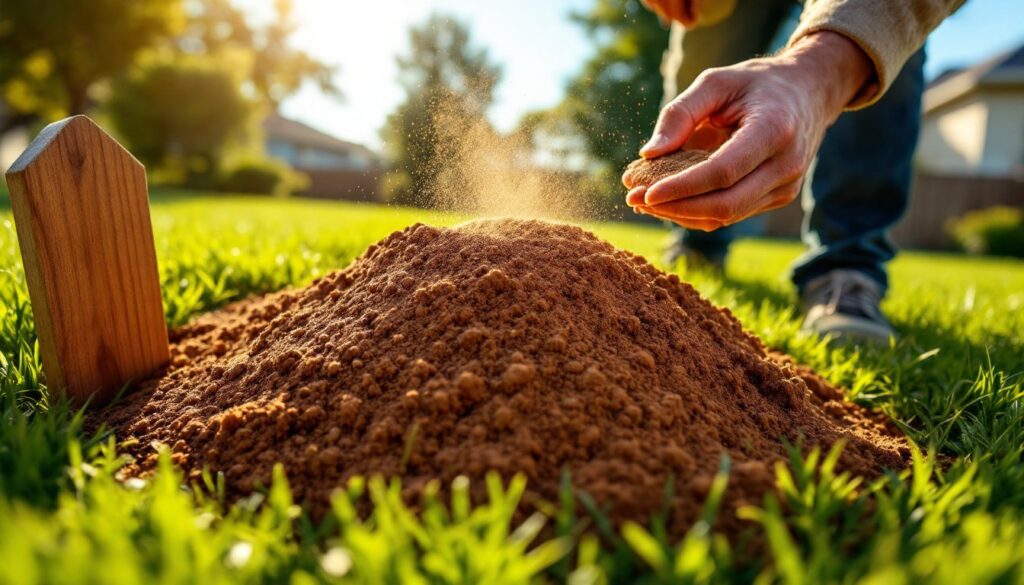
Locate all mounds carefully. Walk your yard systematically. Fire ants build visible mounds, usually 12 to 18 inches tall, but sometimes they nest under debris or lawn edges. Mark each mound with a stick or flag so you don’t forget any.
-
Read the label. Dosage varies by product strength and mound size. Most powders call for 1 to 4 tablespoons per mound, spread evenly across the top and sides.
-
Distribute the powder. Sprinkle powder directly onto the mound and a 12-inch radius around the base. Don’t stir or dig into the mound, this triggers attack behavior. Let the ants’ normal foraging activity carry powder into the colony.
-
Apply to dry mounds only. Wet mounds from irrigation or dew reduce powder effectiveness. If the ground is saturated, wait for drier conditions.
-
Keep distance. Stand back while applying. If ants swarm, stop immediately and move away. Reapply only after ants have returned to the mound.
-
Reapply if needed. If the colony survives after 7 days, repeat treatment. Some mounds require two applications, especially large or well-established colonies.
Safety reminders: Wash your hands and clothes after application. Keep children and pets away from treated areas for at least 24 hours, or per label instructions. Store powder in its original container, out of reach of kids and pets, in a cool, dry place.
Choosing the Right Fire Ant Killer Powder for Your Yard
Selecting the best powder depends on several factors: infestation severity, yard size, pet or child presence, and budget.
For small or light infestations: Natural options like diatomaceous earth or spinosad-based powders are a smart starting point. They’re lower-risk if applied carefully and work adequately for a few mounds. Better Homes & Gardens frequently covers seasonal pest control for residential yards and may offer additional seasonal strategies to pair with powder applications.
For moderate to severe infestations: Chemical-based powders deliver faster, more reliable results. If you have multiple mounds or a history of reinfestation, the extra effectiveness justifies the cost. Pyrethroid powders like those containing permethrin or bifenthrin are widely available, affordable, and proven effective over decades of use.
If you have pets or young children: Ask your veterinarian or pediatrician about acceptable products. Many mainstream powders, when used as directed, pose minimal risk, but some families prefer the extra margin of safety that natural options provide. Always apply powders when kids and pets are indoors or elsewhere.
Coverage area and mound density: If you’re treating a half-acre lot with dozens of mounds, buying small ready-to-use shakers isn’t practical. Large bags of concentrate are cheaper per application. For one or two isolated mounds, ready-made shakers minimize mess and waste.
Regional resistance: In some parts of the southern U.S., fire ants have developed resistance to certain pyrethroids. If your first treatment fails, try a different active ingredient, a neonicotinoid like imidacloprid, rather than repeating the same product. Gardenista and regional extension offices can help you identify which products perform best in your area.
When to Call a Professional for Fire Ant Control
Fire ant powder is effective for most homeowner situations, but some cases call for professional help.
You should hire a licensed pest control operator if:
- Your yard has dozens of mounds or more. Professionals have equipment and resources to treat large areas quickly and can apply powder, baits, or liquid treatments as conditions warrant.
- Mounds are in sensitive areas: near water sources, children’s play areas, or gardens where food is grown. Professionals know local regulations and safe application protocols for these zones.
- Your first treatment failed. This may indicate resistant ants or an improper application. Pros can diagnose the issue and use alternative strategies or combination treatments.
- You have a severe allergy to fire ant stings. Professionals can treat your property in a way that minimizes your exposure to swarming ants.
- The infestation is tied to a structural issue or habitat problem. If ants are nesting inside walls or near your home’s foundation, it’s a sign that conditions favor ant activity. A pro can advise on exclusion and environmental changes needed alongside chemical control.
Professional treatments typically cost $300 to $1,000 depending on property size and service frequency, but they come with warranties and ongoing monitoring that DIY powders don’t.