
Table of Contents
ToggleA solid deck railing isn’t just cosmetic, it’s a safety requirement and a structural feature that protects your family and guests. Whether you’re replacing aging railings or building from scratch, installing a DIY deck railing is a manageable project for homeowners with basic carpentry skills. You’ll need patience, accurate measurements, and an understanding of local building codes, but the result is a sturdy, custom railing that fits your aesthetic and saves you contractor costs. This guide walks you through the process step by step, from code compliance to the final coat of stain.
Key Takeaways
- DIY deck railing installation requires compliance with local building codes, including 36–42 inch height and 4-inch baluster spacing to prevent child safety hazards.
- Use exterior-grade screws (stainless steel in damp climates) and lag bolts for post attachment rather than nails, as nails loosen over time and fail under structural load.
- Pressure-treated lumber for rails and composite or metal balusters offer durability and low maintenance, while cedar or redwood require regular staining but provide natural rot resistance.
- Proper wood acclimation (1–2 weeks for damp lumber) before staining and annual inspection for loose fasteners and soft spots ensures long-term railing performance.
- Most homeowners can complete a DIY deck railing in a weekend or two with basic tools, accurate measurements, and attention to the 4-inch baluster rule that prevents safety violations.
Understanding Deck Railing Codes and Safety Requirements
Before you buy a single board, know your local codes. In the United States, the International Residential Code (IRC) sets the baseline: railings on decks higher than 30 inches above grade must be at least 36 inches tall (measured from the deck surface to the top rail). That said, some jurisdictions require 42 inches, so verify with your building department.
The IRC also specifies that balusters (vertical spindles) must be spaced no more than 4 inches apart, this prevents a 4-inch sphere from passing through, a safety measure to keep children’s heads from getting trapped. This 4-inch rule is non-negotiable, so spacing your balusters accurately is critical.
Load requirements also matter. Your railing must resist 200 pounds of outward horizontal force applied anywhere along the top rail. This sounds abstract, but it means you need solid connections and properly sized lumber. Posts must be lag-bolted or screwed to rim joists or beam ledgers, never just nailed.
Permits vary widely. Some jurisdictions require a permit for any deck railing work: others exempt repairs or replacements of like-for-like railings. Call ahead and confirm whether you need an inspection. Skipping this step can complicate insurance claims or future home sales.
Choosing the Right Materials for Your DIY Deck Railing
Your material choice affects durability, maintenance, cost, and the overall look of your deck. Pressure-treated lumber is the most common and affordable option. Standard 2×6 lumber works well for top and bottom rails, while 4×4 posts (which measure roughly 3.5 inches square, actual size) provide the structural anchor points every 4 to 6 feet along the railing run.
For balusters, you have flexibility. 2×2 lumber is traditional and economical. Composite balusters (plastic and wood fiber blends) resist rot and require less maintenance but cost more upfront. Metal balusters (aluminum or steel) offer a modern look and won’t rot, though they conduct cold and heat, not ideal in extreme climates.
Cedar or redwood are attractive alternatives if you’re willing to stain and seal regularly: they’re naturally rot-resistant but softer than pressure-treated pine and dent more easily. Composite or vinyl railings are fully pre-built systems that skip framing entirely but carry a premium price and limited customization.
Material selection also depends on your deck’s finish. If you’re staining your deck dark, light-colored composite balusters might look jarring. Pressure-treated lumber takes stain and paint well once weathered, but new lumber may require primer. Budget 15–20% extra material for cuts, mistakes, and waste.
Tools and Hardware You’ll Need
You don’t need a full workshop, but you do need the right tools for safe, accurate work.
Essential tools:
- Miter saw or circular saw (miter saw gives cleaner angled cuts, especially for decorative work)
- Power drill-driver with bits for drilling pilot holes and driving screws
- Level (2–4 feet long)
- Tape measure (25 feet minimum)
- Square (framing or speed square for layout)
- Pencil and marking gauge
- Sawhorses or a work table
- Jigsaw for decorative top rail shapes (optional but useful)
Hardware:
- Galvanized or stainless-steel fasteners (crucial in damp climates to prevent rust staining)
- 3-inch lag bolts or exterior-grade deck screws (1/2-inch diameter) for attaching posts to rim joists
- 2.5-inch exterior deck screws for attaching rails to posts
- 1.5-inch pocket hole screws if using a Kreg jig for invisible connections
- Metal brackets or post caps (optional, for reinforcement)
Safety gear:
- Safety glasses (non-negotiable around the saw)
- Work gloves
- Dust mask when cutting pressure-treated lumber (sawdust contains arsenic compounds: avoid inhaling)
- Hearing protection if using power saws for extended periods
Pressure-treated lumber releases harmful compounds when cut, so cut outdoors when possible and wash your hands afterward.
Step-by-Step Installation Process
Prep and Layout
Measure the deck perimeter and decide on post spacing. Posts every 4 feet is standard, though some codes allow up to 6 feet if your top rail is robust. Sketch the layout, noting corners and any protrusions.
If you’re attaching to an existing rim joist, use a stud finder to locate solid wood where you’ll anchor posts. Pressure-treated posts should rest on concrete footings below the frost line, not directly on soil. If the deck is already built and you’re just replacing railings, drill carefully through the rim joist and ledger board without hitting plumbing or electrical runs.
Install Posts
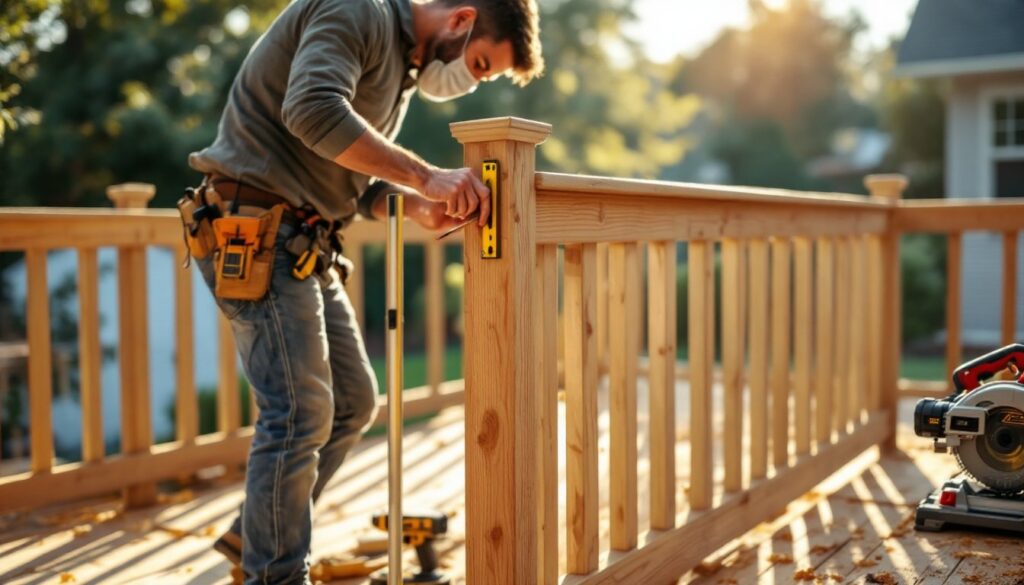
Set the first 4×4 post at a corner. Use a level to ensure it’s plumb (perfectly vertical) in both directions. Secure it with two 3-inch lag bolts or through-bolts minimum, spaced 4–6 inches apart vertically. If you’re bolting to a rim joist, use washers under bolt heads to prevent the fastener from pulling into soft wood.
Work your way around the deck, installing posts at marked intervals. Taller railings (above 42 inches) may require additional bracing, consult your local codes or a Fine Homebuilding guide on railing design if your deck is unusually tall.
Attach Rails
Attach the bottom rail first, typically 4–6 inches up from the deck surface (leave enough clearance for debris to sweep underneath). Use 2.5-inch exterior deck screws, three per post. Pre-drill pilot holes to reduce splitting in pressure-treated wood. The bottom rail stabilizes the structure: the top rail bears the brunt of horizontal load, so don’t skimp on fasteners.
Attach the top rail last, positioned 36–42 inches above the deck surface, depending on local code. Use the same three-screw-per-post approach. A level is your best friend: even slight misalignment becomes obvious and looks amateur.
Install Balusters
Space balusters evenly and no more than 4 inches apart. Mark their positions on the top and bottom rails before installation. If you have a 10-foot run and are using 2×2 balusters, space them roughly 3.5 inches apart center-to-center.
Attach balusters with two 1.5-inch screws (or pocket hole screws for a finished look) at the top and two at the bottom. Pocket holes are less visible from a distance and look more polished. A Bob Vila resource on railing installation walks through pocket hole techniques if you’re unfamiliar.
Check Your Work
Once the frame is up, grab a 4-inch sphere (or use a 4-inch PVC pipe as a gauge) and verify balusters don’t allow it to pass through. Rock the top rail, it should barely move. If it flexes, add a horizontal brace between posts or increase your fastener count.
Common Mistakes to Avoid
Skipping the 4-inch rule. Installers sometimes space balusters 5 or 6 inches apart to use fewer boards and save money. Don’t. A child’s head fits through a 5-inch gap, and inspectors will catch it. Plan for the 4-inch spacing from the start.
Nailing instead of screwing. Nails loosen over time and offer poor holding power in dimensional lumber. Use exterior screws (stainless or galvanized) every time. Pressure-treated lumber is dense, pre-drill pilot holes to prevent splitting and to make driving easier.
Ignoring wood movement. Lumber expands and contracts with moisture and temperature. Install pressure-treated lumber at its delivered moisture content and allow it to acclimate a few days before staining. Paint or stain won’t adhere well to wet wood, and top-coating too early causes peeling and rot. Allow 1–2 weeks before finishing if the wood feels damp.
Wrong fasteners. Galvanized fasteners work, but stainless steel won’t leave rust stains on light-colored wood or composite. In coastal areas or high-moisture regions, stainless is worth the extra cost. Mixing fastener types also causes galvanic corrosion where dissimilar metals meet.
Poor post attachment. Posts lag-bolted to a rim joist are solid: posts bolted only to the deck band board (the board facing outward) may pull loose. Lag bolts need to bite into solid wood at least 3 inches deep. If your rim joist is less than 1.5 inches thick, use through-bolts and a washer on the backside.
Forgetting horizontal bracing. Long railing runs (more than 6 feet) benefit from a mid-rail or diagonal bracing to resist racking (the frame twisting under load). Check local code to see if horizontal bracing is required in your jurisdiction.
Finishing and Maintenance Tips
Once the frame is secure, finish it properly to extend its life. Pressure-treated lumber comes green (freshly treated) and needs time to stabilize, typically 3–6 months before staining, though many DIYers stain earlier with acceptable results.
Before finishing, sand the top rail smooth (80–120 grit) to reduce splinters and improve paint or stain adhesion. Wipe dust with a damp cloth and allow it to dry. A semi-transparent wood stain highlights grain and requires recoating every 2–3 years. Solid-color stain or exterior paint lasts 3–5 years and hides imperfections but requires a primer coat first, especially on pressure-treated wood.
Composite and vinyl balusters don’t require finish coats, which saves annual maintenance. Pressure-treated rails need annual inspection, look for soft spots, checking (surface cracks), and loose fasteners. Re-tighten bolts each spring if needed.
For detailed finishing techniques and comparisons of products, Instructables tutorials offer step-by-step walkthroughs on staining and sealing deck railings. Proper sealing prevents water infiltration, which is the leading cause of railing failure over time.
Conclusion
Building a DIY deck railing is achievable if you respect the codes, measure twice, and commit to solid fastening. The biggest wins come from understanding the 4-inch baluster spacing rule, using the right fasteners, and allowing wood to acclimate before finishing. Start with a clear sketch, confirm your local requirements, and take your time on layout. Most DIYers can complete a 20-foot railing in a weekend or two. Your reward is a safe, custom railing that enhances your outdoor space and proves you can handle a structural project on your own.