Table of Contents
ToggleA well-organized walk-in pantry isn’t just about aesthetics, it’s about reclaiming time, reducing food waste, and knowing exactly what you have on hand. Too many homeowners treat their pantry like a storage black hole, shoving items onto shelves and hoping to find them later. The truth is, an effectively organized walk-in pantry saves money, prevents duplicate purchases, and makes meal planning genuinely easier. This guide walks you through seven proven strategies to transform your pantry into a functional, accessible space that actually works for your household.
Key Takeaways
- Start with a complete inventory assessment and accurate measurements of your walk-in pantry space to establish a realistic baseline for organization planning.
- Invest in clear, airtight storage containers and adjustable shelving to maximize usable space and reduce food waste by maintaining visibility of contents.
- Group similar items into category zones with frequently used staples at eye level to reduce search time and make restocking intuitive for all household members.
- Label every container with contents and expiration dates, then maintain a simple digital inventory to prevent duplicate purchases and forgotten items.
- Use vertical space strategically by installing ceiling-height shelves and door organizers, but prioritize safety by keeping heavy items at accessible heights.
- Schedule monthly 15-minute maintenance checks and involve all household members in the system to ensure your pantry organization ideas remain functional long-term.
Assess Your Current Inventory and Measure Your Space
Before you buy a single bin or label, do the hard work upfront. Pull everything out of your pantry and sort items by category: grains, canned goods, snacks, baking supplies, oils, and so on. Be honest about what’s expired, stale, or taking up valuable real estate. You’d be surprised how many opened boxes of cereal or half-used ingredients lurk in the back.
Once you’ve decluttered, measure your pantry carefully. Jot down the height, width, and depth of shelves, as well as any awkward corners or obstacles. Note which areas receive natural light and which stay dim, this matters for food storage and visibility. Take photos of the current layout from multiple angles. These measurements and photos become your baseline for planning. A pantry that looks spacious when empty will reveal its true capacity once you’re working with actual inventory.
Invest in Smart Storage Containers and Shelving Solutions
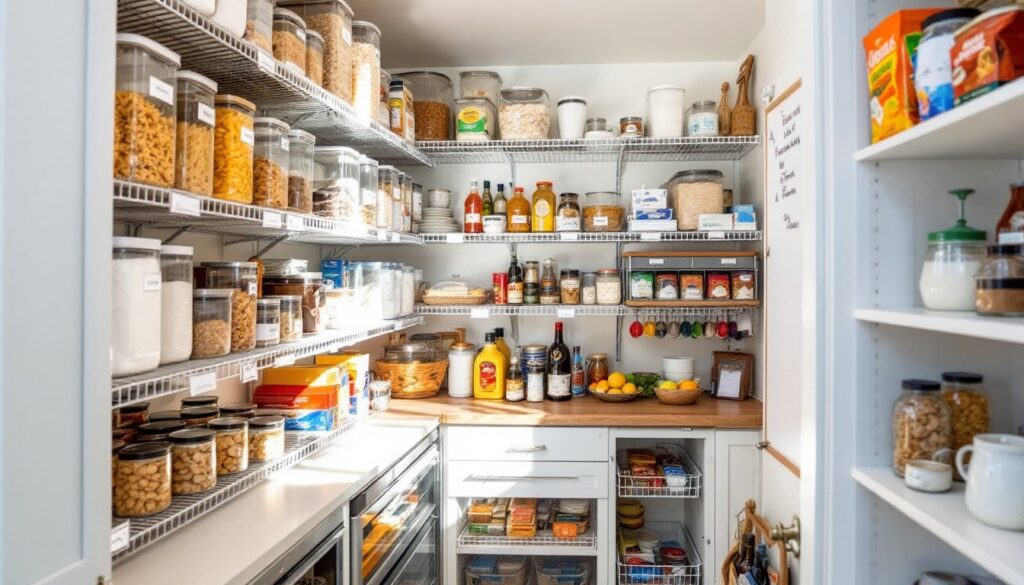
The right containers transform a chaotic pantry into an organized system. Clear plastic or glass containers let you see contents and fill levels at a glance, reducing the risk of overbuying and food waste. Airtight containers keep dry goods fresher longer and prevent pest intrusion, a real concern in any pantry.
For shelving, evaluate what you have. If your pantry came with basic wire shelves spaced far apart, adding a second tier of shelves or adjustable shelf dividers can double your usable space. Solid shelves work better than wire for small items that might slip through. Avoid over-loading shelves: items should sit flat and stable, not crammed to the point of toppling.
Resources like The Kitchn and The Spruce showcase real pantries organized with everyday containers and creative shelving hacks. You don’t need expensive custom systems, quality plastic bins, stainless-steel shelves, and simple drawer organizers often outperform premium branded systems.
Choose the Right Container Types for Different Food Items
Not all containers are created equal. Cereal, pasta, and flour work well in tall, stackable bins with tight seals. Snack packs and granola bars fit better in shallow drawer-style organizers. Canned goods don’t need airtight containers, they benefit more from tiered shelf risers so you can see labels without moving items.
For baking supplies, consider small jars with pour spouts for sugar, baking soda, and baking powder. Label these clearly on the lid. Oils, vinegars, and sauces should live on lazy Susans or turntables, they’re easier to access and rotate. Frozen items, if your pantry has a freezer section, need breathable containers or bags to prevent freezer burn. The goal is matching the container type to how you’ll actually use and restock each item.
Organize by Category and Create Zones
Walk-in pantry organization ideas often overlook the psychology of placement. Your brain works best when similar items live together. Group all grains in one zone, canned vegetables in another, snacks in a third. This reduces search time and makes restocking intuitive.
Consider your daily habits. Frequently used items, your go-to breakfast cereals, coffee, or cooking staples, should live at eye level on easily accessible shelves. Less frequent items, like specialty baking ingredients or backup supplies, can sit on higher or lower shelves. Keep a “kids’ snack zone” at a height they can safely reach without pulling shelves down on themselves.
Many DIY Home Organization projects succeed because they match the system to the household’s actual rhythms. Store items where you use them or near where you’d logically look first. This reduces frustration and makes the system stick long-term.
Implement a Labeling and Inventory System
A label maker is your best friend. Invest in a decent one, Dymo and Brother make reliable models under $40. Label every container with the contents and the date you filled it. For dry goods transferred to containers, note the expiration date so nothing sits forgotten for years.
Beyond physical labels, consider a simple digital inventory. A Google Sheet or basic app lets you track what you have, what’s running low, and what’s missing. Before grocery shopping, flip through your inventory. You’ll be shocked how often you pass over items you already own.
Maintain a small whiteboard or chalkboard at the pantry entrance for items running low. Family members can add requests, preventing surprises when you reach for something that’s already gone. Inexpensive Home Organization Ideas don’t require fancy tech, a notebook and pen are enough if you commit to checking them before shopping trips.
Maximize Vertical Space and Use Every Corner
Vertical space is where most pantries waste potential. Install shelves that reach the ceiling if you have tall ceilings, even 6-8 inches of height adds up. Use the back of the pantry door for slim racks, hooks, or adhesive baskets holding lightweight items like tea packets, instant oatmeal, or spice jars.
Corners often become dead zones. A corner shelving unit or a tiered corner ladder shelf turns that awkward space into usable real estate. For deep shelves, use stackable risers or shelf dividers so front items don’t block access to what’s behind them.
Lazy Susans on high shelves let you spin to find items instead of reaching and stretching. Over-the-door hanging organizers work for spices, snacks in individual packets, or lightweight condiments. The key is that everything stored up high needs to be lightweight and easy to retrieve, never stack heavy canned goods overhead. Martha Stewart’s pantry organizing tips emphasize using every inch, but always prioritize safety and accessibility over cramming in more stuff.
Maintain Your Pantry Organization for the Long Term
Organization systems fail when maintenance stops. Schedule a quick 15-minute pantry reset once a month. Check expiration dates, consolidate partially full containers into one, and wipe down shelves. When you grocery shop, place newer items behind older ones so nothing expires unwatched.
Involve household members in the system. If everyone knows where things live, the pantry stays organized. Teach kids which zones are theirs to access and where to return items after use. A pantry that three people are committed to maintaining beats a perfectly organized space that only you use.
When you notice something isn’t working, a shelf arrangement that’s awkward, a container that’s the wrong size, or categories that don’t match your actual cooking patterns, adjust it. Organization isn’t one-and-done: it evolves as your household does. Building habits now, like the strategies outlined in this Home Organization Planner guide, ensures your pantry stays functional year after year.
Transform Your Pantry Into a Functional Space
A well-organized walk-in pantry does more than look neat, it streamlines meal planning, reduces food waste, and frees up mental energy. By assessing your space, investing in smart storage, creating zones, labeling everything, maximizing vertical space, and committing to maintenance, you’ll build a system that actually works. Start with one section, prove the concept works for your household, then expand. The best pantry organization is the one you’ll maintain.